Beyond rhododendron: the invasive non-native species threatening Scotland’s rainforest
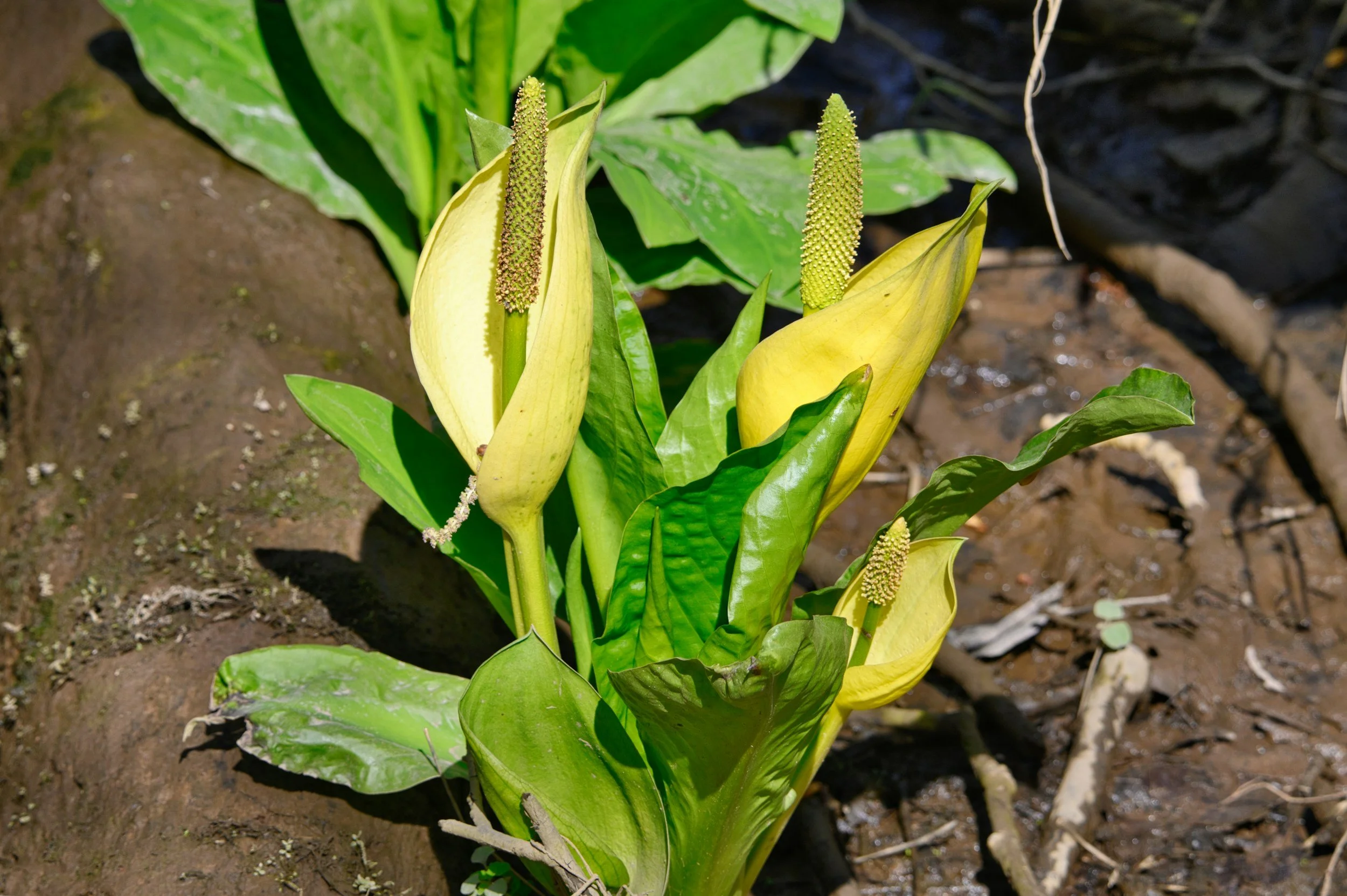
Skunk cabbage, credit Unsplash
The west of Scotland is home to some of the largest surviving areas of temperate rainforest in Europe. What makes these woods important isn’t just the trees, but the huge range of mosses, liverworts and lichens that grow here, some of which are found in few other places. But Scotland’s rainforest is under threat. High numbers of deer, climate change, tree diseases and even wildfires are all putting the remaining areas of rainforest at risk. One of the biggest threats, however, is from invasive non-native species, also known as INNS.
What are invasive non-native species?
Non-native species are plants and animals found outside their natural range, either because people have deliberately moved them, or because they’ve moved them inadvertently.
In the UK, we define any species that arrived here after the year 1500 as non-native, and according to DEFRA, there are well over 3000 recorded. Mostly these are garden plants, agricultural crops, pets or farm animals, but there are also plants, insects, and marine creatures that have been introduced by accident.
Around 2000 of these species are ‘established’ meaning they can and do reproduce in the wild outside of the care of people. That’s a scary number, but most of these have found an ecological niche and aren’t causing many problems. This is also called being ‘naturalised’.
However, over 200 of these non-native species are classified as invasive (INNS). These are the plants and animals that are specifically having an impact on our wildlife, and sometimes on human infrastructure as well. Some non-native species haven’t been here long enough to start causing problems, but it’s likely that they will over time, meaning that the INNS list will get longer.
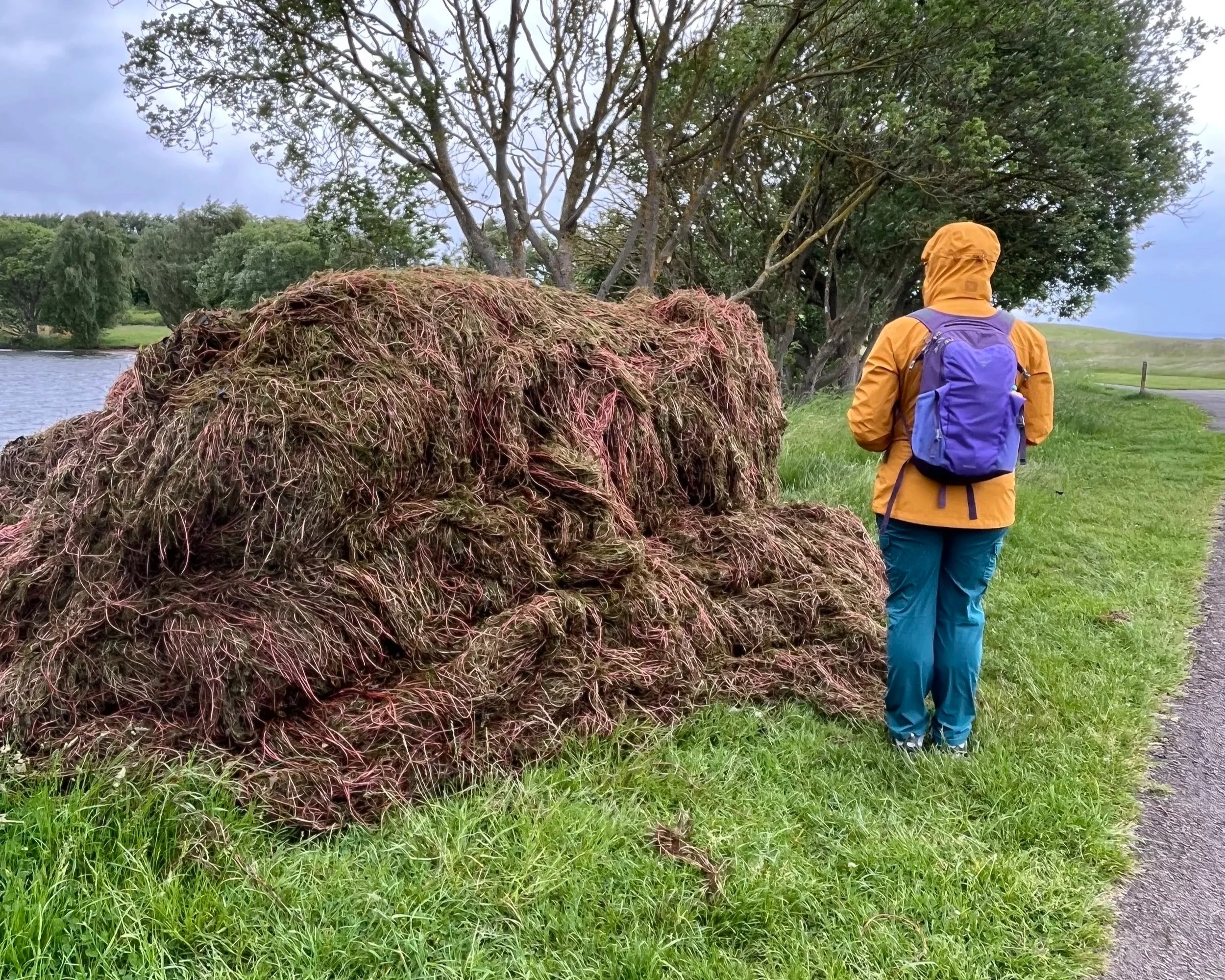
Wetland INNS are a huge problem. This is Canadian waterweed being removed. Credit Jenny Tweedie
INNS may not feel like much of an issue, because they rarely hit the headlines. But they’re not just a problem here: they’re a global emergency, reducing biodiversity and driving animal extinctions.
In the UK, they cause havoc with native wildlife, and often have economic and even safety ramifications for people and communities too. In fact, it’s currently estimated that INNS cost Scotland’s economy £499m every year.
The problem with ponticum in Scotland’s rainforest
Over 300 years ago, a type of rhododendron called Rhododendron ponticum was introduced to many gardens and estates in the west of Scotland as an ornamental plant, and also to provide cover for game birds. Unfortunately, the climate and conditions proved to be perfect for these plants and rhododendrons are now thought to be growing across 140,000 hectares of the rainforest zone, almost five times the area where rainforest itself survives.
They’ve spread so well because each plant produces millions of seeds, which can blow over huge distances. As the seedlings grow, they shade out all other plants, removing competition. Eventually, they can reach several metres tall, and very little survives underneath their evergreen canopy.
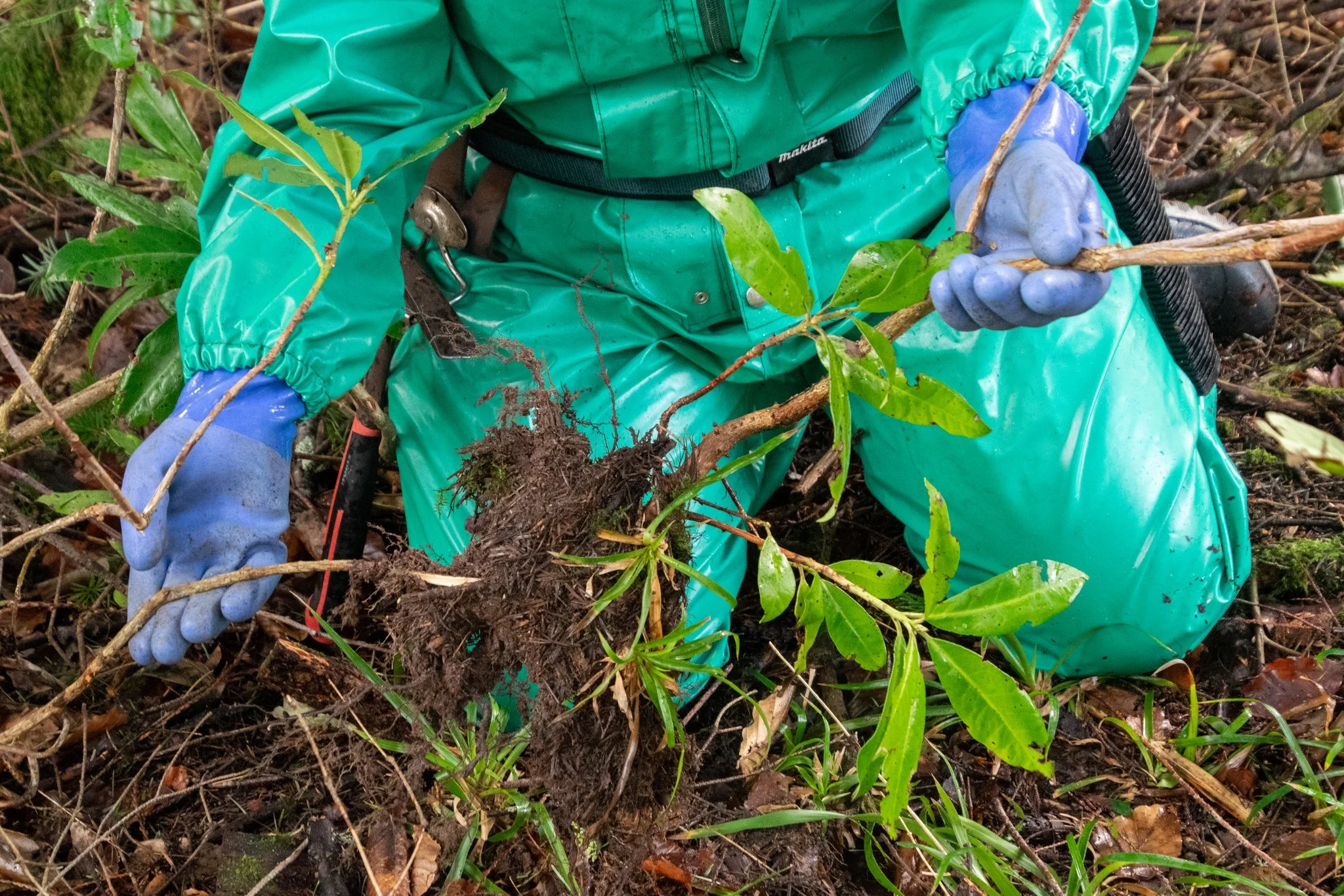
Rhododendron being removed. Credit Woodland Trust
All this means that these plants are a huge threat to our rainforests, and the native wildlife found there. Young trees are smothered out, so when the old trees die, there’s nothing to replace them. Very few of the rare lichens and mosses of the rainforest can grow on the rhododendrons, or survive under the heavy shade these plants create, and practically none of our rainforest animals can tolerate the toxins that rhododendrons produce, so they’re not being controlled naturally.
Because they’re such a massive issue, a lot of focus has gone into tackling rhododendrons in Scotland’s rainforest, and rightly so. But they’re not the only INNS causing trouble.
More invasive non-native species that threaten Scotland’s rainforest
There’s a long list of INNS that are or could cause issues in the rainforest, including giant hogweed, giant rhubarb, Spanish bluebells, Virginia creeper, snowberry and buddleia. But here are a few that experts are particularly worried about.
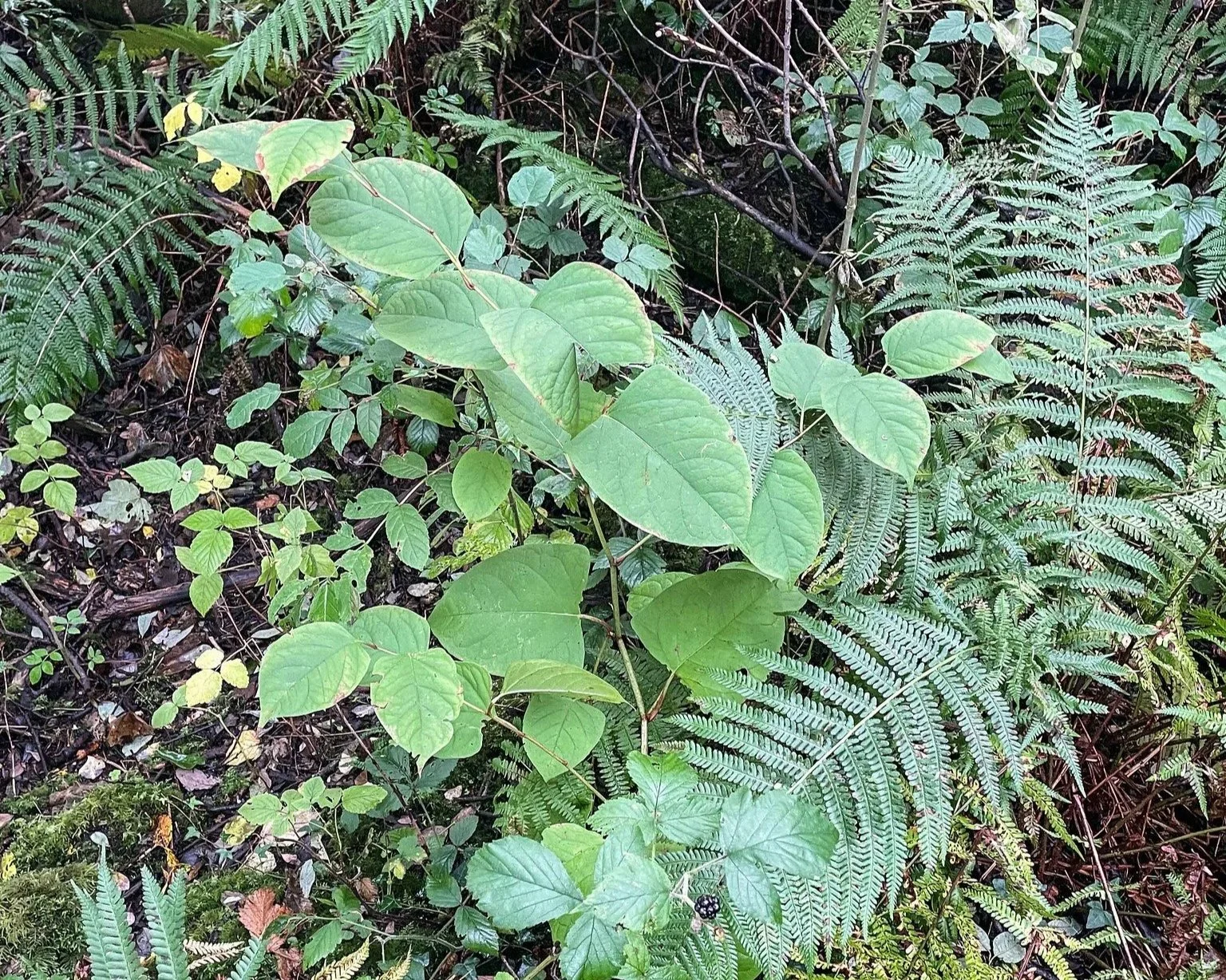
Japanese knotweed found growing in Scotland’s rainforest. Credit Laura Corbe
Japanese knotweed
Knotweed can already be found in the rainforest, but it has the potential to spread much more widely. Although unable to reproduce by seed in the UK, it spreads vegetatively and even a tiny bit of root can grow into a new plant. It’s often humans that move it around with garden waste, compost, or soil. Once established in woodland, it out-competes native plants and causes issues with riverbanks. It’s extremely hard and expensive to remove, as many home owners know to their cost!
Gaultheria
You might not have heard of this garden plant (which is also knows as salal or the shallon bush) but it’s fast becoming a big problem in the rainforest. Gaultheria shallon was introduced from America in the 1830s by David Douglas (him of Douglas fir fame). As well as ornamental uses, like ponticum it was also planted as cover for game birds. It spreads easily through berries eaten by birds, and then by rhizomes once established. It’s a particular problem in rainforest woodlands that have been recently cleared of rhododendron, and can form dense, waist-high thickets that are very difficult to control, shading out other plants and lichens.
Feral pigs
Once a native species to the UK, wild boar died out in Scotland by the early 1600s. In recent decades, captive-bred escapees have started appearing in rainforest areas such as Loch Arkaig. These have hybridised with domestic pigs, which are bigger in size and have higher reproductive rates, and they have no natural predators, so if left unchecked, they’re likely to spread fast. There’s a concern that they could become a particular problem in Atlantic oak woodlands because acorns are a favoured food. While some disturbance can be good for rainforest habitat, uncontrolled levels of disturbance can damage important species, such as mosses and liverworts, which take a long time to recover.
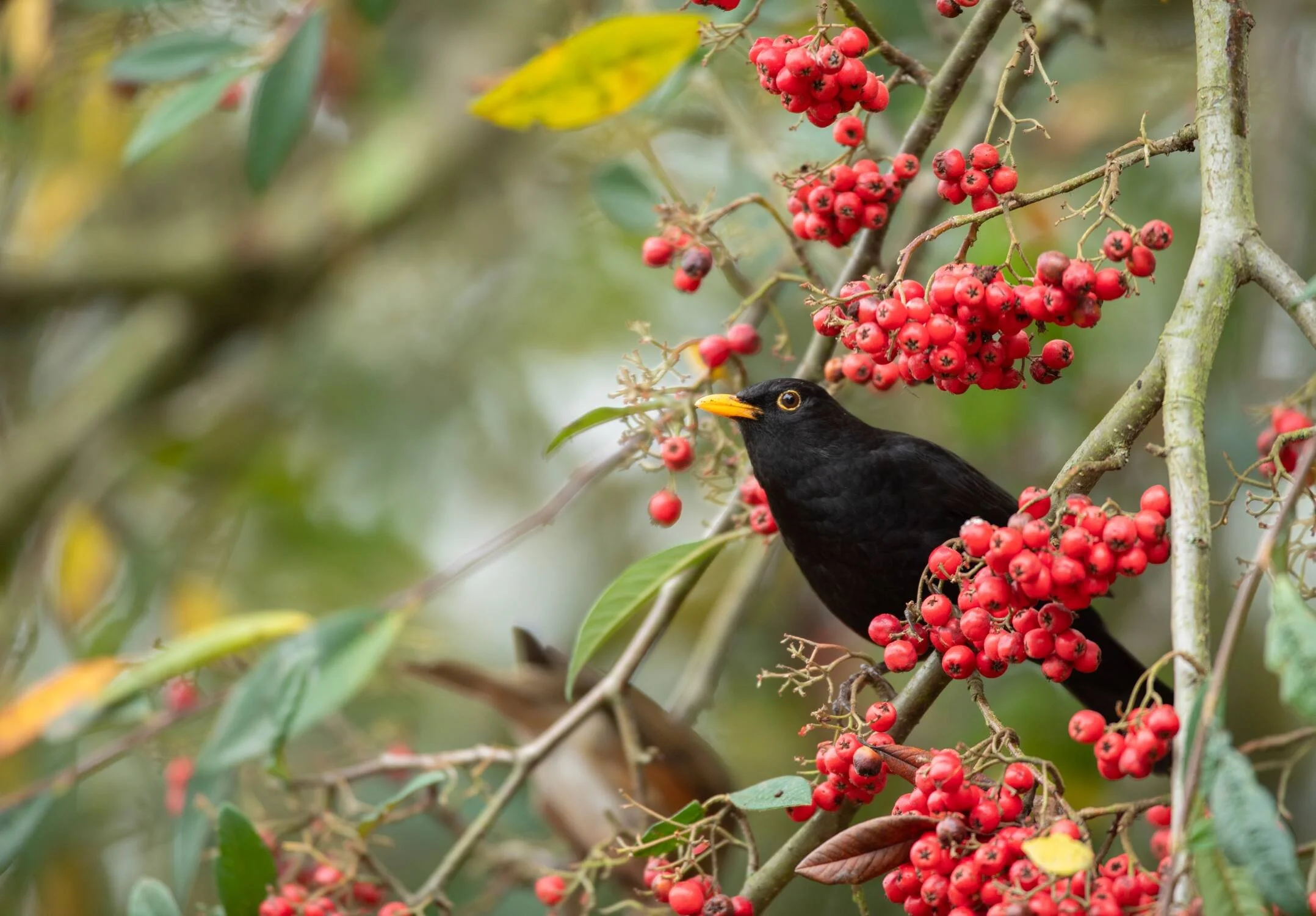
No, not the blackbird… it’s the cotoneaster berries it’s eating that are the problem. Credit Ben Andrew
Cotoneaster
This common garden plant spreads through seeds carried far and wide by the birds which have eaten its berries. That’s why you’ll sometimes find it even in remote sites, where it can form dense thickets that out-compete native plants. Many species are not invasive, but the ones to avoid are: hollyberry (C. bullatus), wall (C. horizontalis), entire-leaved (C. integrifolius), small-leaved (C. microphyllus), and Himalayan (C. simonsii).
Grey squirrels
Introduced into urban parks by the Victorians, grey squirrels can now be spotted across much of Scotland, where they damage trees, and spread squirrel pox virus to our vulnerable native reds. A lot of work has taken place to stop the spread of grey squirrels into the Highlands, and much of the rainforest zone is currently grey-free. But that could change in the future, with potentially devastating consequences.
Skunk cabbage
This wetland plant thrives in the many waterways that are a constant feature of rainforest landscapes. Its huge leaves overshadow native wetland plants and can impact water flow. Once established it’s difficult to remove, and its prolific seeds mean that it can spread fast and start to dominate areas.
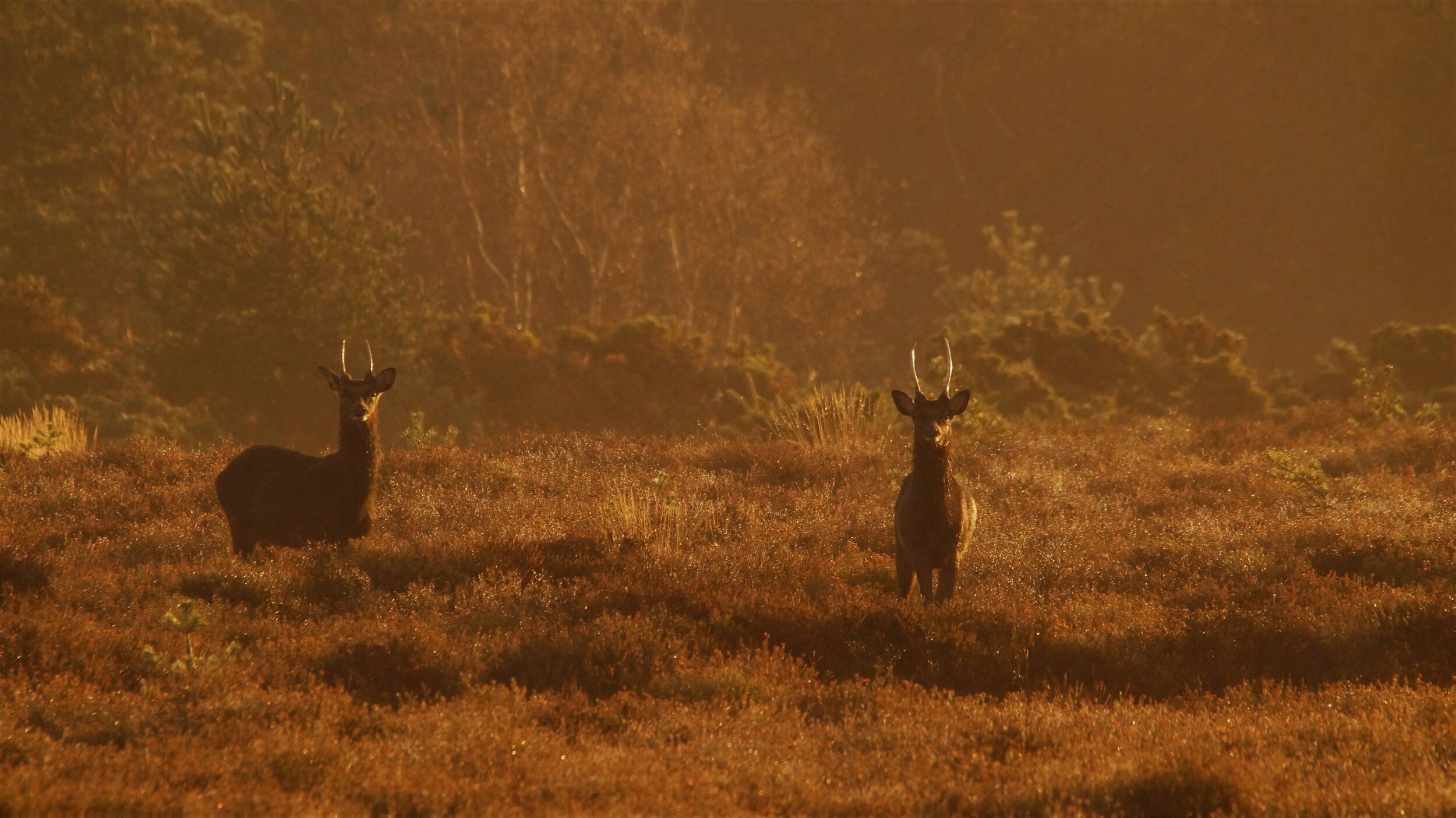
Sika deer are a growing threat. Credit Annabel Sharpe
Sika deer
Introduced to the UK in the 19th century, there are now thought to be at least 25,000 sika deer in Scotland, mostly in the west. They may actually cause more damage than native deer, browsing young trees, but also stripping bark from mature trees. They’re more fertile than native deer, and can live in harsher conditions. Their wariness also makes them harder to cull.
Himalayan balsam
A familiar plant now along urban rivers, and a constant target for eradication programmes. Its exploding seed heads mean that it can spread quickly through water catchments, including into Scotland’s rainforest, where it outcompetes native plants in summer, then dies back in winter, leaving bare soil vulnerable to erosion.
Cherry laurel
Laurels are popular garden hedging plants, but cherry laurel has become a major threat to native woodlands. It arrived in the UK in the early 1600s, and was already established in the wild by the late 1800s. Its evergreen canopy blocks light year-round, while its leaves contain toxins that inhibit soil organisms. Like cotoneaster, it spreads via berries.
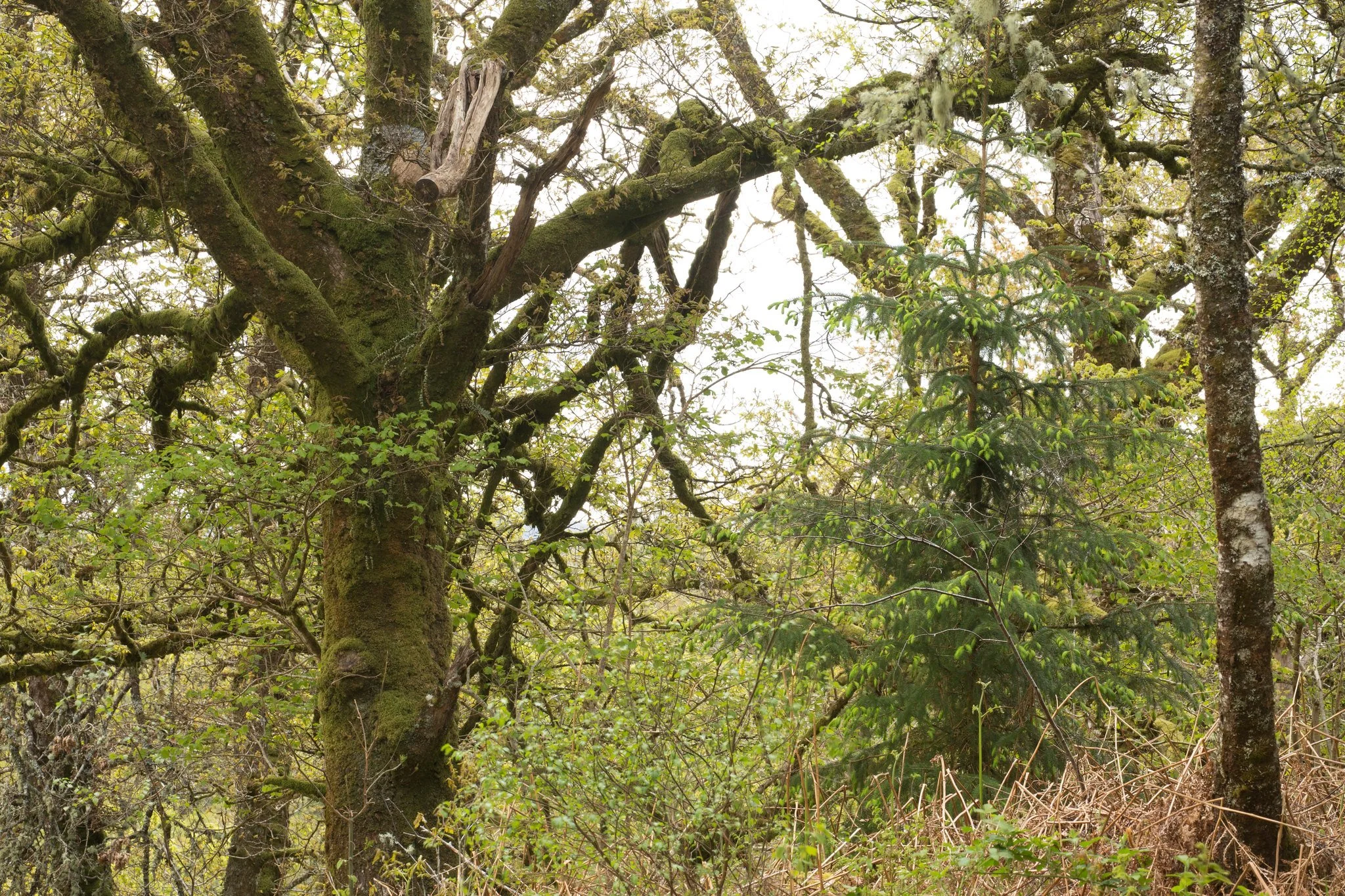
Sitka spruce in the rainforest. Credit John MacPherson
Non-native regeneration
Native woodlands that were historically felled and replaced with commercial conifers are called Plantations on Ancient Woodland Sites or PAWS. The conifers are nearly always non-native, mostly Sitka spruce, but also lodgepole pine and Western hemlock. While they don’t fall under the legal definition of INNS, these species are invasive and have a habit of spreading into rainforest woodland, which creates issues with humidity, light and biodiversity.
Rhododendron is still the biggest threat to Scotland’s rainforest but it’s not alone
Rhododendron ponticum remains the most urgent invasive species that we need to tackle in Scotland’s rainforest. But if we remove it while ignoring other problem species, we risk being blindsided by a second wave of threats.
What we need is a holistic approach that addresses all invasive species, and supports natural regeneration.
What can you do?
Don’t plant invasive species in your garden no matter where you live, but particularly in the rainforest zone, or if your garden borders open countryside. Some INNS are still available at garden centres perfectly legally: it’s only illegal to allow them to spread into the wild. Always double check before you buy/plant, and be cautious at local plant sales and swaps. Often people want to get rid of plants that spread invasively!
If you discover that you have INNS in your garden (plant ID apps can help, though they aren’t 100% accurate), consider removing them, but be careful how you do it. Don’t put them into green waste bins as this can spread the plants to a wider area, and obviously, fly tipping them is even worse (and illegal of course!) With some plants, you can potentially burn them or double bag them and put them into your general waste. But with some species, it’s even illegal to do this, and you need to take them to a recycling centre that’s set up to deal with them. Don’t home compost either, be careful with the soil, and clean tools and other equipment carefully. There’s more information on this here.
Challenge your local garden centre (or supermarket) to stop selling INNS.
There’s information on how to report invasive species here. You can report grey squirrel sightings here.
If you’re a landowner or manager, we have lots of guidance on Rhododendron removal on our resources pages.
Ask your MSP or MP to take on the issue of INNS in Scotland’s rainforest.
If you live in the rainforest zone, look for volunteering opportunities to remove INNS, or consider putting together a local community action group.
Donate to one of the ASR’s partners carrying out rhododendron removal, such as the Woodland Trust, RSPB, ACT or the National Trust for Scotland.
