Scotland’s rainforest is more than just trees. It’s a unique mix of ancient woodlands, open glades, river gorges, ravines and crags. The warm, damp climate also favours the growth of special grassland habitats, which provide food for butterflies and moths that are only found in the western rainforest zone. Anthony McCluskey from Butterfly Conservation, tells us more.
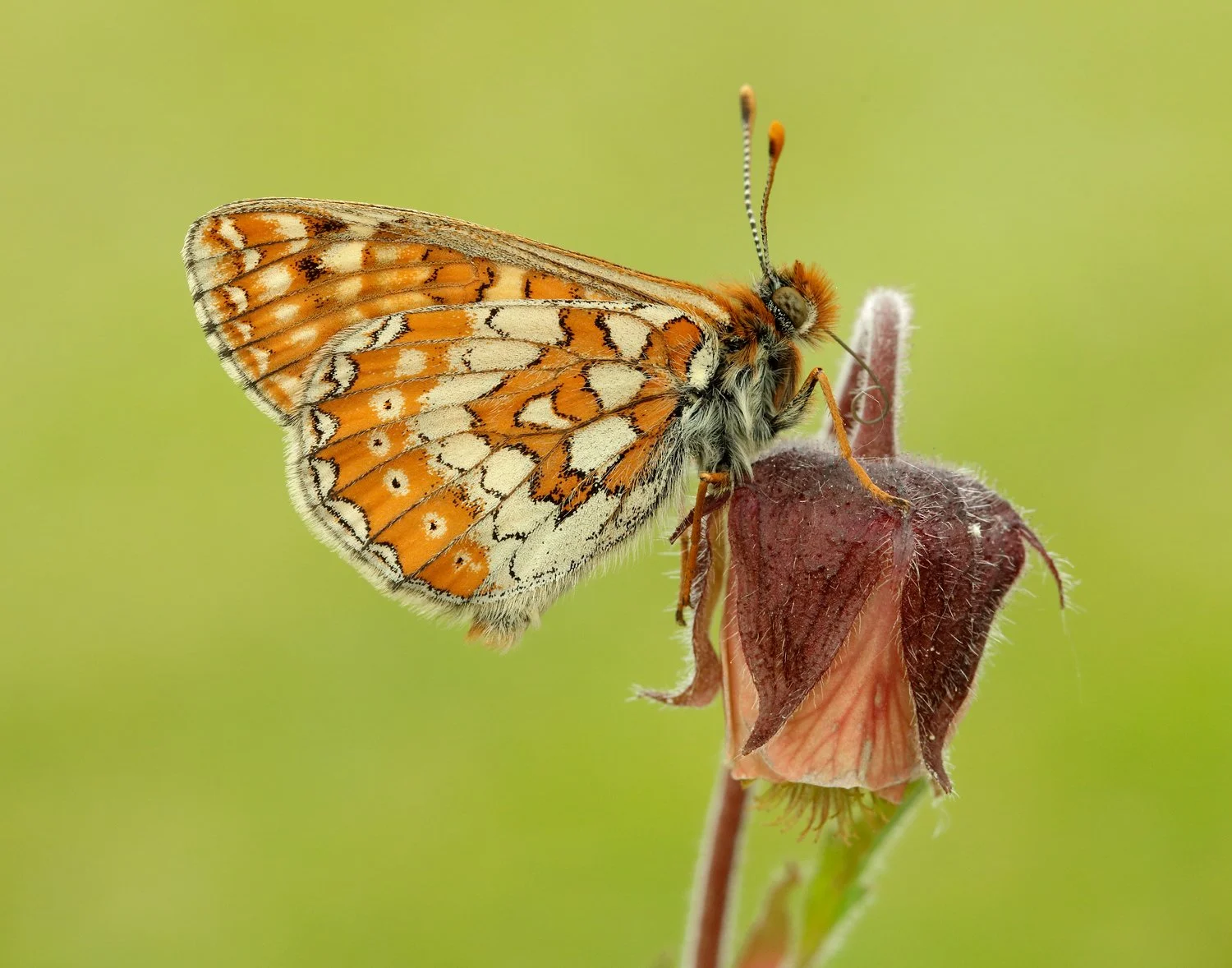
Marsh fritillary, credit Iain Leach
One of the most incredible sights in late summer is that of meadows covered in the purple haze of scabious flowers. These are devil’s-bit scabious, a plant named for the ragged appearance of the roots that look like they’ve been bitten from below. Yet one of the insects associated with this plant is strictly above-ground: it’s the marsh fritillary.
A butterfly with kids that are picky eaters
As the name suggests, marsh fritillaries are found in damp habitats. Adults fly in May and June, and females will lay their eggs only on the leaves of devil’s-bit scabious. The caterpillars hatch and feed in groups all summer, and by late August and September will produce ‘larval webs’ on the scabious. These slimy-looking webs protect the caterpillars from predators, and are fairly easy to find when you know what to look for.

Devils-bit scabious. Credit Jenny Tweedie
The marsh fritillary is one of our most threatened butterflies. Flower-rich damp pastures where it was once found have been lost to intensive grazing, grassland re-seeding and wetland draining in the past. Contemporary pressures include forestry plantations, under- and over-grazing of grasslands, and invasive non-native species.
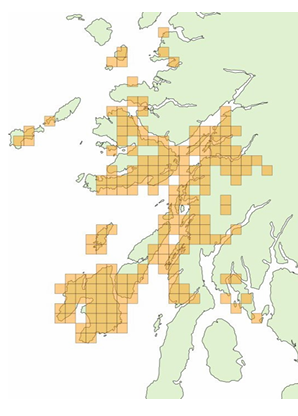
The Scottish distribution is now mostly along the west coast of Argyll and Lochaber, and some of the western isles. Here, the warm, wet climate provided by the Gulf stream provides the right conditions for devil’s-bit scabious, and the butterfly that depends on it.
The butterfly people travel hundreds of miles to see
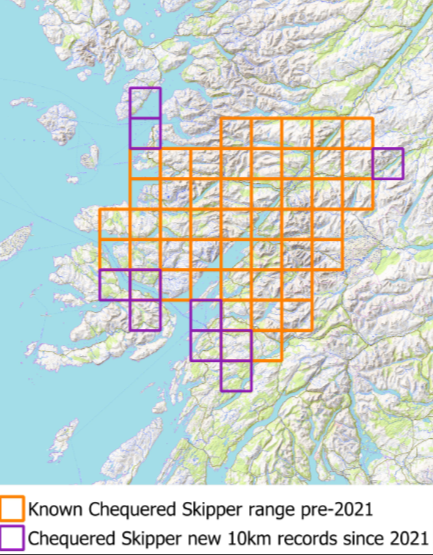
While the marsh fritillary can be found in other parts of the UK and Ireland, one species of butterfly, called the chequered skipper has the great majority of its UK population in Scotland’s rainforest. This butterfly is restricted to areas where the summer is long enough to allow their larvae to feed for a long time and reach a large size. They can only survive the winter if they reach this certain stage, so the warmth provided by the Gulf stream is vital; further inland the first autumn frosts come sooner, effectively stopping the feeding of the larvae. These feed only on purple moor-grass, and usually only at the edges of woodlands and sunny glades and rides.
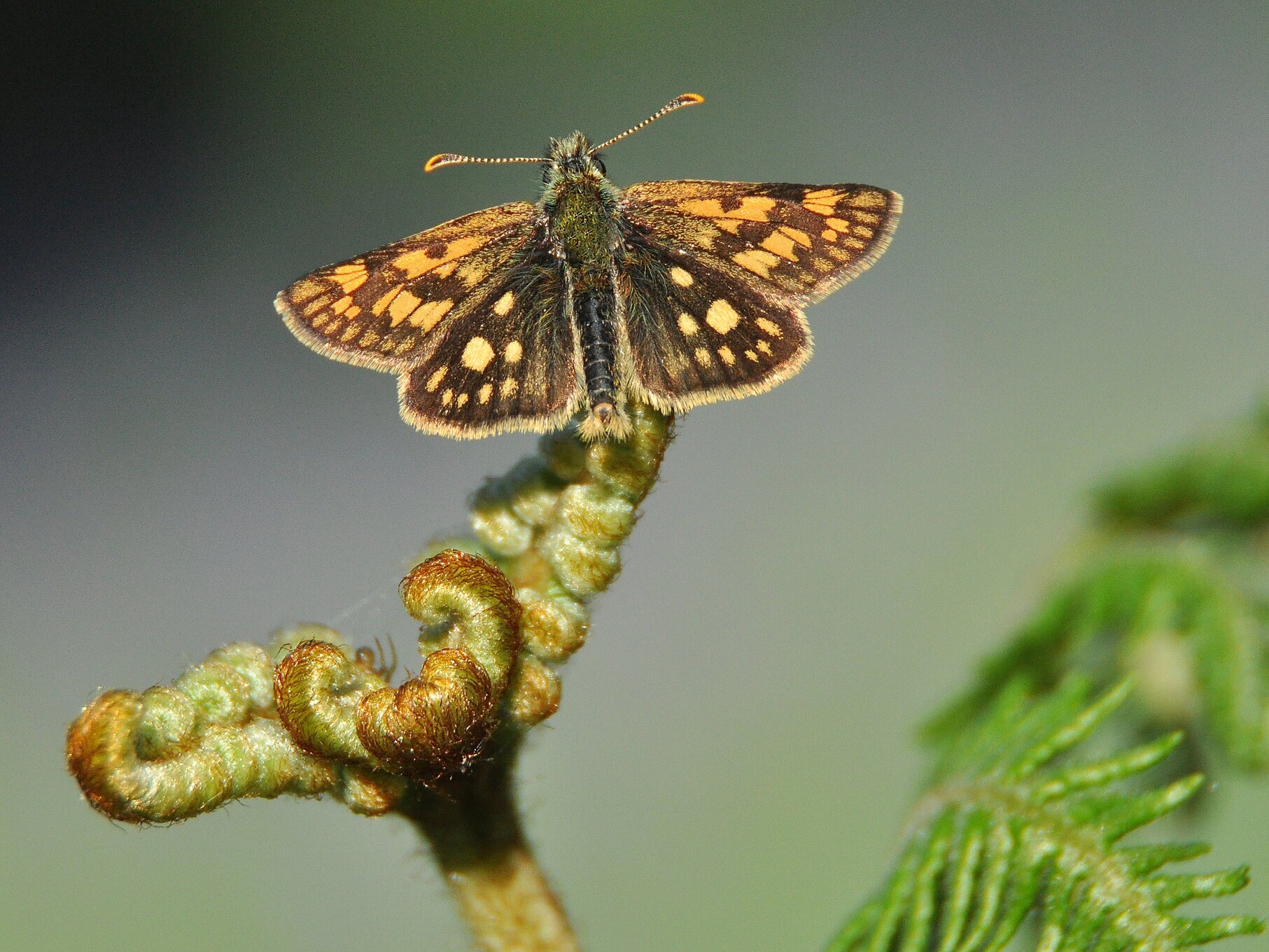
Chequered skipper. Credit Tim Melling
This beautiful little butterfly is so restricted in its range that until recently, butterfly-watchers from across the UK had to flock to this corner of Scotland if they wanted to see it. For many it was the culmination of a lifetime ambition to see all of the UK’s butterfly species. Yet the species was recently introduced to a woodland in England, from where it had become extinct in the 1970s. While this means that some butterfly enthusiasts have a shorter distance to travel now, it’s only around Scotland rainforest that this butterfly can be described as a widespread and locally-common countryside species.
Scotland’s rainforest is great for moths as well
One final species to mention is the sweet little white-spotted sable moth. In Scotland it is only known from Argyll and Lochaber, where its larvae feed on Goldenrod, usually at woodland glades and margins.
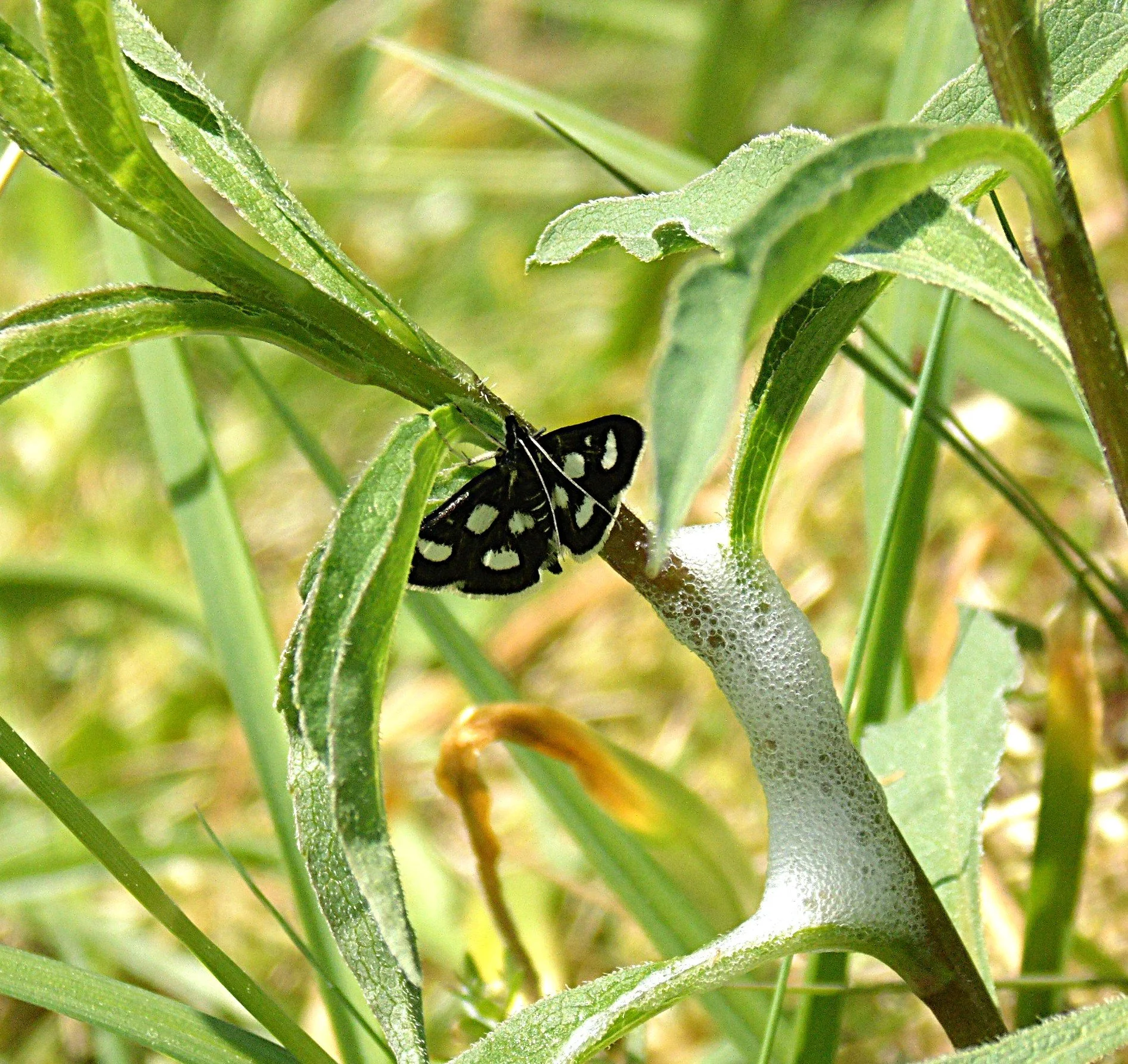
Credit Anthony McCluskey
Butterfly Conservation and Scotland’s rainforest
Butterfly Conservation is a proud member of the Alliance for Scotland’s Rainforests. We work actively with the group to promote the principles of maximising biodiversity in a sensitive way. We advocate that rainforest land managers conduct surveys of open ground near their woodlands, looking for species-rich grassland that ought to be kept open and free of trees.
We also promote an approach to woodlands which allows them to have open glades, rides and uneven edges where species-rich grassland and butterflies and moths can thrive. Likewise, if land is fenced to allow woodland regeneration we recommend that grazing is still allowed on certain open areas that require it. Without grazing, some grassland sites would become thick with rushes and tall grass, resulting in a loss of the lower-growing wildflowers.
The great thing is that it is possible to have both rainforest and species-rich grassland. There may be instances of conflicting demands on land, but we encourage land managers to work with us and organisations like Plantlife to find solutions that will result in habitats in better condition, and more connected in the landscape.
Questions and support
If you have any questions about any of the species and habitats mentioned here, I’m happy to be contacted at amccluskey@butterfly-conservation.org
We would be happy to provide maps of records of these species near your land, and may be able to conduct site visits for species surveys, or provide advice based on pictures and maps.
Find out more at https://butterfly-conservation.org/
