

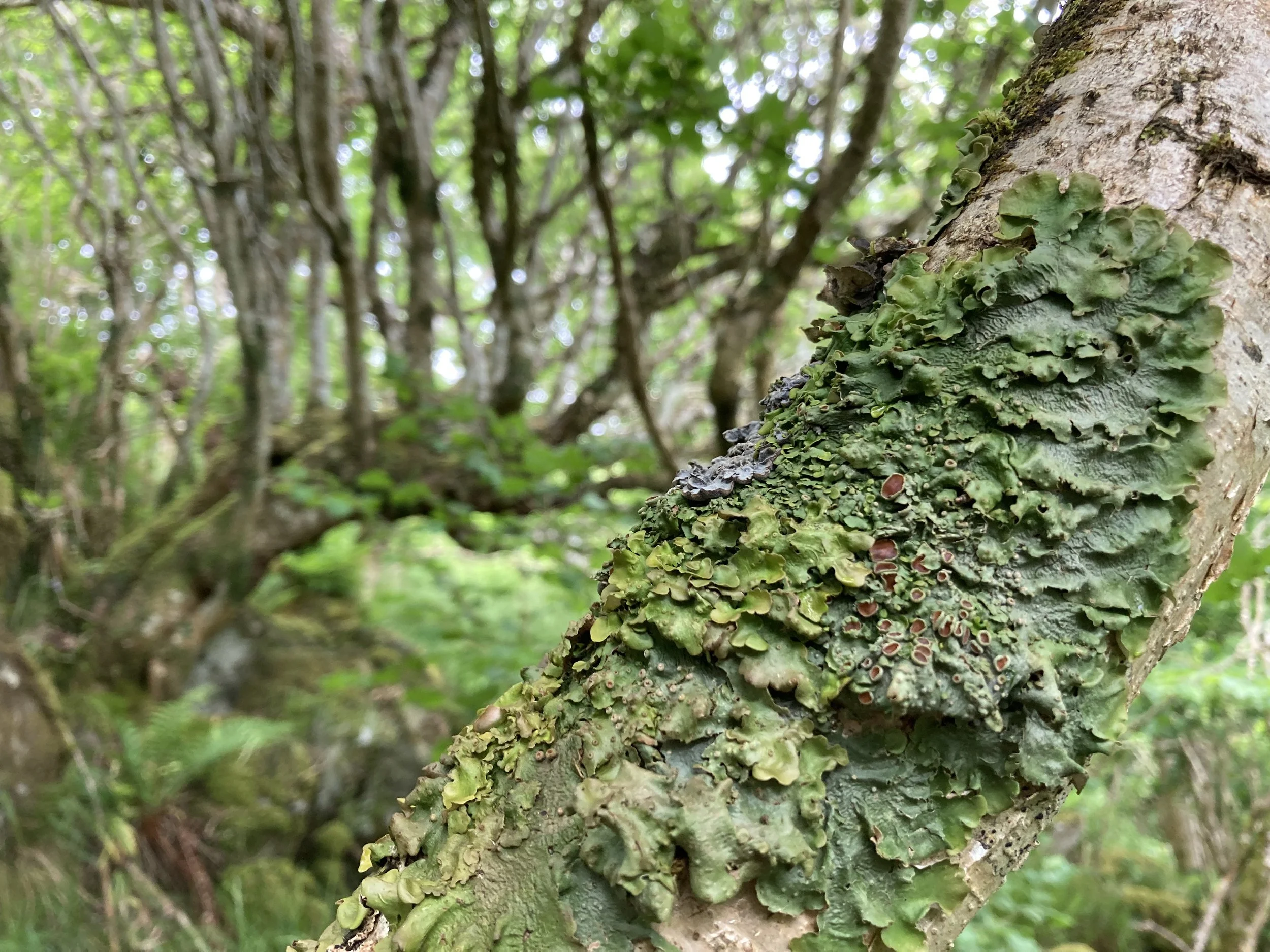
The Wildlife of Scotland’s rainforest
Scotland’s rainforest is bursting with wildlife
Why does Scotland’s rainforest have such high biodiversity?
Old growth woodlands and ecological continuity
What trees will I see in Scotland’s rainforest?
Lichens of the rainforest
Bryophytes of the rainforest
Ferns of the rainforest
Other wildlife you’ll find in the rainforest
Where to see wildlife in Scotland’s rainforest
Introduction
The west of Scotland is home to a rare habitat called temperate rainforest. What makes these woods important isn’t the trees. High rainfall, relatively mild temperatures and clean air provide the perfect conditions for rare mosses, liverworts and lichens to thrive.
The sheer abundance, diversity and rarity of species found in Scotland’s rainforest make this unique habitat internationally important. In fact, we have the best remaining sites in all of Europe.
But Scotland’s rainforest is in trouble. As little as 30,000 hectares remain, and it faces many threats.
If we don’t start taking serious and urgent action to support and protect our rainforest, we face the risk of losing this internationally important habitat completely. And the longer we wait, the harder it will become.
The good news is that communities and organisations up and down the west of Scotland are coming together to tackle threats to the rainforest, and help restore and expand surviving woodlands.
Scotland’s rainforest is bursting with wildlife
Scotland’s rainforest is a complex habitat of native woodlands, river gorges and open glades that are packed full of wildlife. More than 500 species of lichens, mosses, liverworts and ferns call these woodlands home, but they also ring with birdsong, and play host to a huge array of insects, flowers, mammals, and amphibians.
The mosses and liverworts that grow here are of international importance, and rival those found in the cloud forests of Latin America, Africa, and the Caribbean. We also host a lichen (the white script) that’s found no where else in the world, and many other lichens that are of international importance. The sheer number and abundance of species is different to any other ecosystem in Europe, and this is what makes Scotland’s rainforest so unique. In fact, it’s one of the most biodiverse habitats in the UK.

Chequered skipper butterfly. Credit Tim Milling
Why does Scotland’s rainforest have such high biodiversity?
Biodiversity is a way of measuring the variety of lifeforms in a defined area. All these lifeforms combined with the habitat they live in create what’s called an ecosystem.
In an ecosystem, every living thing depends on something else to stay alive. The more biodiversity there is, the more complex the connections between species, and the more resilient a system is to change.
But how is it that Scotland’s rainforest has such high biodiversity compared to other habitats?
Climate
Wet, warm environments with few weather extremes are great for plants and insects and all the things that feed on them, and then all the things that feed on them all the way up the food chain.
Lack of pollution
Clean winds that blow off the Atlantic help to keep the air in west Scotland fresher, rather than bringing pollution from cities, cars and industries. Remote woodlands are also less likely to be impacted by the run-off from intensive agriculture and other sources of waterborne pollution. Lichens in particular can be very sensitive to pollution, and many species have vanished from other parts of Scotland because of it.
Ecological continuity
Old-growth woodlands and ecological continuity
That doesn’t mean that all the woods of Scotland’s rainforest are entirely ‘natural’ or untouched.
People have been using trees for millennia to burn for firewood, to create shelter, and for tools.
During the industrial revolution, the demand for wood was huge. Oak was favoured for charcoal production, and its bark for use in tanning leather. Birch was cut for making bobbins and reels for use in the textile industries. Even lichens were harvested for making dyes, sometimes in vast quantities.
More recently, commercial forestry plantations have replaced large areas of native woodland in the rainforest zone. Their trees often spread, and today the non-native Sitka spruce is the most common tree found in the whole of Scotland.
Other ornamental non-native trees also grow in the rainforest, having spread from the managed parks and gardens where they were planted.
With all these pressures, it’s surprising that any woodlands have retained their original wildness! But some have, often in remoter parts of the rainforest zone, or where the trees are growing in hard-to-reach places. Here you’ll find what scientists call old-growth woodland.
These might be areas of woodland where industrial action was taking place, but where some trees survived untouched. Or it might be areas where more sympathetic interactions have always taken place between people and trees, such as hazel woods left un-coppiced because they were valued for winter grazing.
These old-growth woodlands create ecological continuity where lichens, mosses and liverworts, have simply been left alone to grow for a very long time. Other wildlife, like birds and butterflies, also benefit from the lack of disturbance and more natural woodland structure.
Places such as these are important because they support species that don’t tolerate disturbance and therefore can’t be found anywhere else. These are called ‘old-growth indicator species’.

The habitat mix that makes up Scotland’s rainforest is complex, but at its heart are ancient woodlands that have been growing in the same spot since Scotland was first mapped in 1750, and probably a lot longer.
Some of the hazel woods on the west coast are thousands of years old, and could well be remnants of the oldest woodlands in Scotland.
Ballachuan hazel wood. Credit John MacPherson
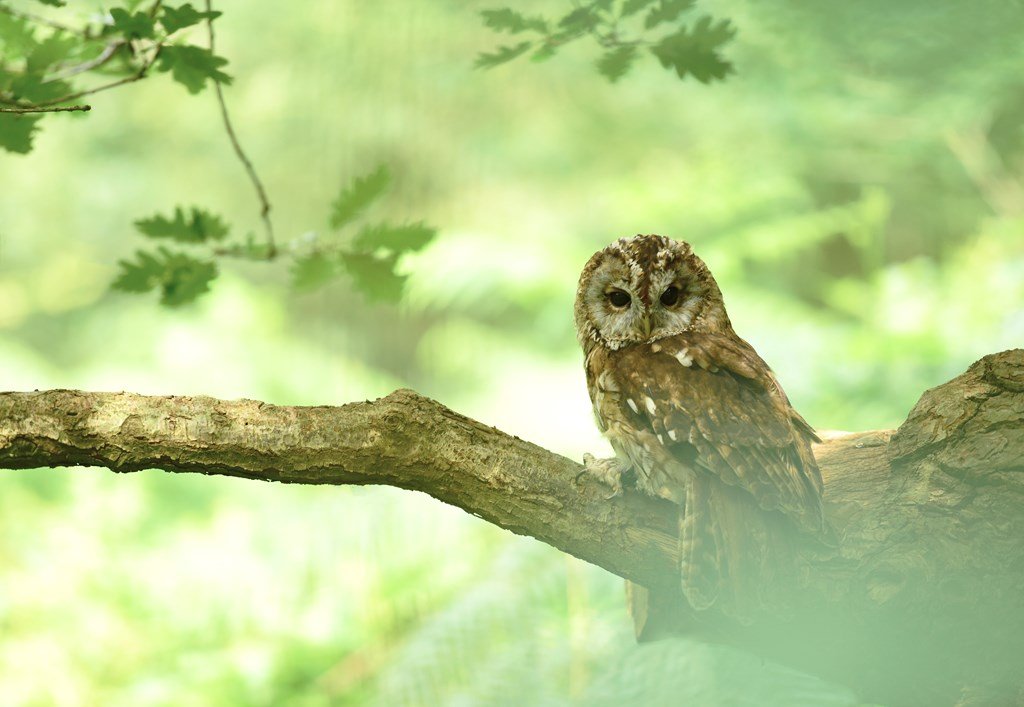
Tawny owl. Credit Ben Andrew
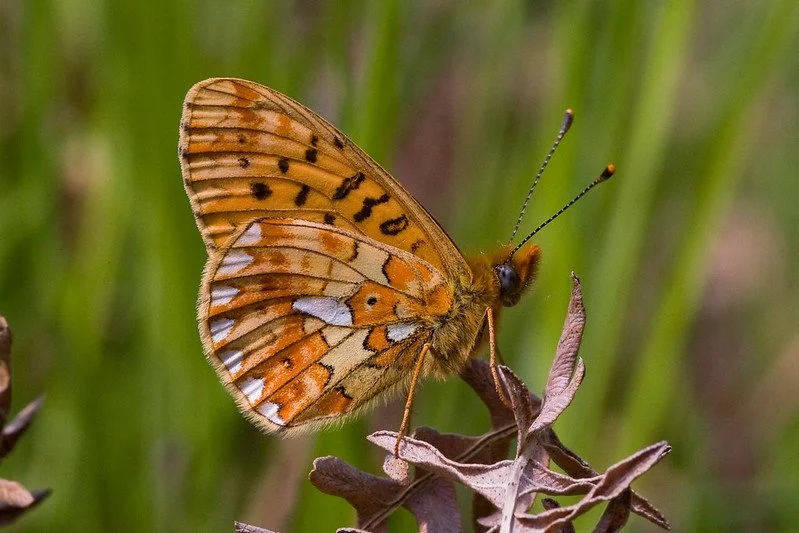
Pearl-bordered fritillary. Credit Peter Eeles.

Prickly featherwort. Credit Stan Phillips
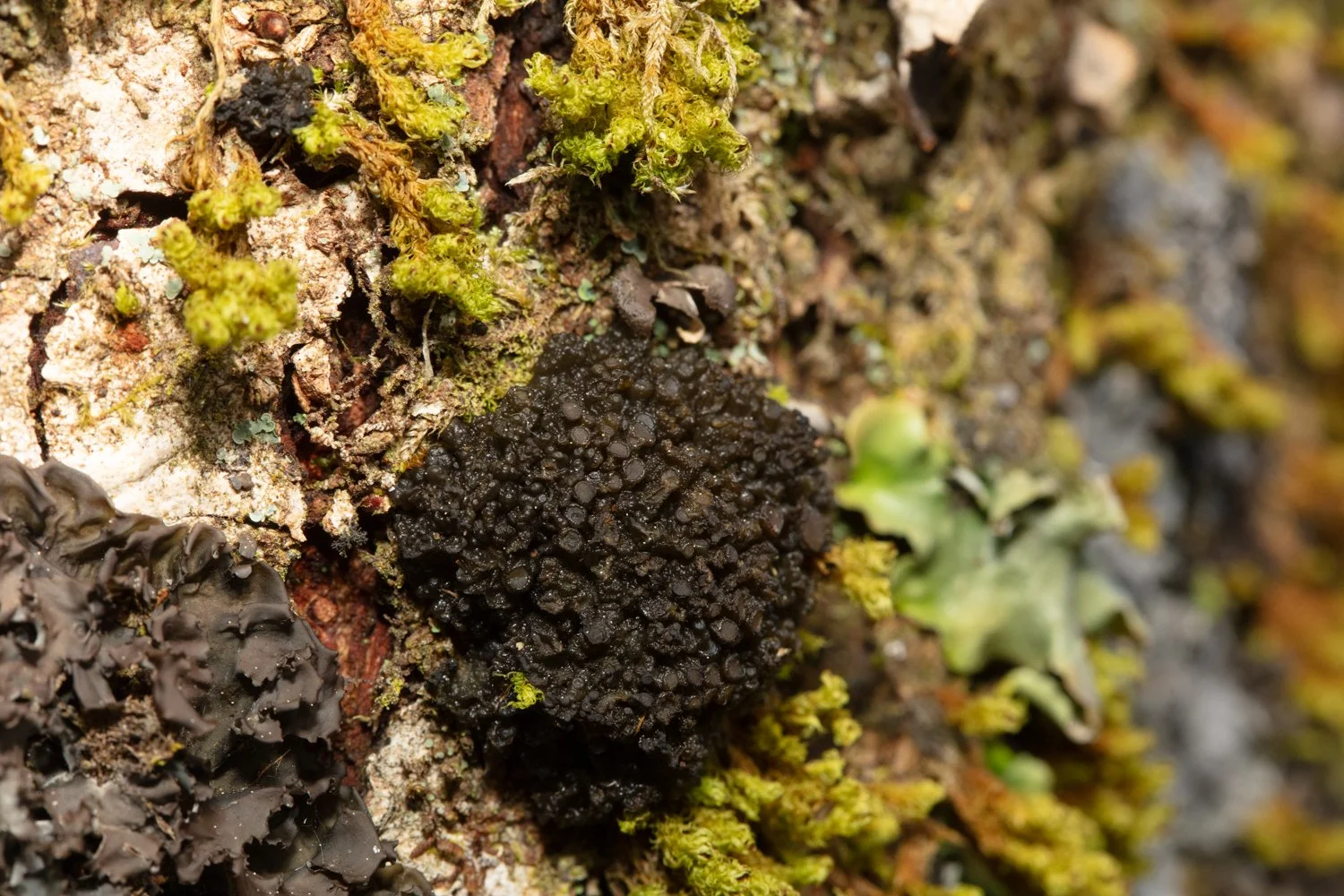
Octopus suckers. Credit John MacPherson
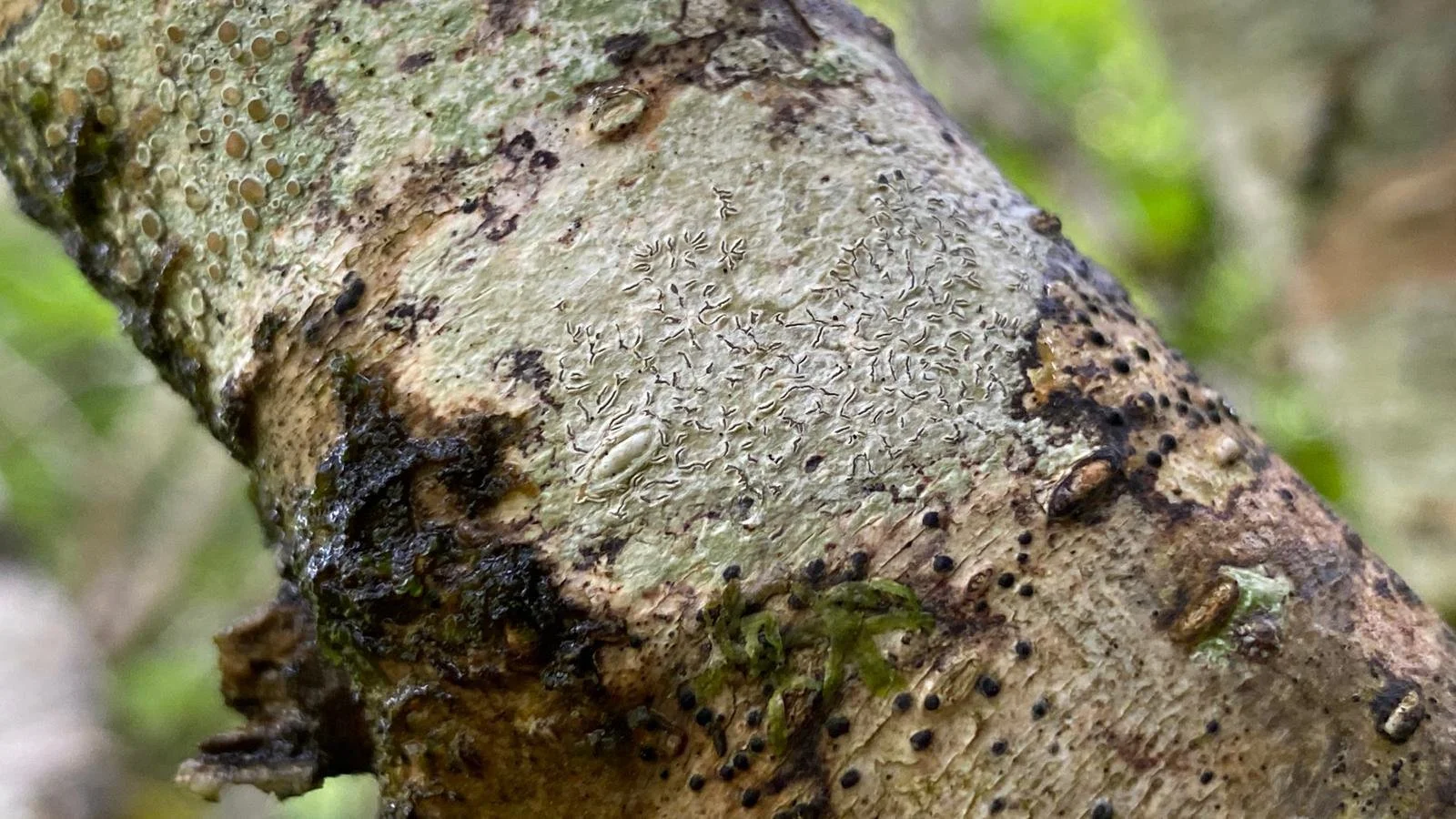
White-script lichen. Credit Alasdair Firth
What are indicator species?
In Scotland’s rainforest, there are five types of wildlife you might see:
Wildlife you’ll find all over Scotland (eg tawny owls)
Wildlife that does well in Scotland’s rainforest, and less well elsewhere (eg pearl-bordered fritillary butterflies)
Wildlife you’ll only see in temperate rainforests (eg prickly featherwort)
Wildlife you’ll only see in old-growth woodland in temperate rainforests (eg octopus suckers lichen)
And wildlife you’ll only see in old-growth woodland in Scotland’s rainforest and absolutely nowhere else (eg white-script lichen)
Three, four and five are classed as indicator species, as they can only survive in very specific environments. Threes are usually common in the rainforest and can colonise new areas within decades if there’s disturbance. But fours and five can only be found in the highest quality rainforest remnants. The more of these indicator species are found, the less ecological disturbance there will have been over the millennia.
Indicator species are used by scientists to identify important areas of rainforest woodlands, and once identified, these places can be protected. Finding these species in the rainforest isn’t easy and many are quite challenging to identify, unless you’re an expert. But if you’re interested, a full list of indicator species for Scotland’s rainforest can be found in Ben Averis’ guide (starting on p38) A-Provisional-Definition-of-Temperate-Rainforest-in-Britain-and-Ireland-Ben-Averis-2023-13-07-2023.pdf
What trees will I find in Scotland’s rainforest?
Around 60 different species of native trees and shrubs can be found in Scotland’s rainforest, but no specific mix of these makes a wood a rainforest. That’s because it’s not trees that define this habitat, but the climactic zone they’re growing in, and the indicator species found there.
Every woodland within Scotland’s rainforest zone is unique, because each one is not only a reflection of a specific geography and micro-climate, but an end product of hundreds, and sometimes thousands, of years of human history.
Birch is the most common native tree found in the rainforest zone, with oak coming in second. In the far northwest, Caledonian Pinewoods merge with broadleaved woodlands to create a special type of temperate rainforest that’s found no where else in the country.
While woodland with a mix of native trees tends to be best for supporting wildlife, as they have a greater variety of niches, hazel-dominated woods are actually some of the richest when it comes to rare lichens. These ancient stands of hazel were only recently recognised as a distinct woodland type, but if they’ve grown without coppicing, they can be very biodiverse.
The trees of Scotland’s rainforest
Oak woodlands make up around a fifth of the total area of remaining rainforest. They’re so common because they’re a valuable tree for humans, and historically would have been encouraged to grow for timber and industries such as charcoal making. They’re vital habitats for thousands of different species of bryophytes, lichens, invertebrates, birds and mammals, some of which depend on the oaks completely for survival. However, because these woodlands were so heavily cut and managed in the past, many are in poor condition, and although wildlife is slowly returning, their full biodiversity may not be recovered for decades.
Hazels don’t usually form big ‘trees’ but rather grow as multiple stems from a stump or stool, which could live for hundreds of years. Hazel trees are important for wildlife, including mosses and liverworts, several unusual species of fungi, including hazel gloves, and lichens such as the white script. With adequate sun, they can also produce large quantities of nuts each autumn, which feed birds and mammals.
Birch is the most common tree in Scotland’s rainforest zone, and there are two species you’re likely to see: silver and downy. It’s common because birch trees are a pioneer species that produce huge quantities of light seeds, and can quickly spread into new areas. The young trees also seem to be less palatable for deer and other browsing animals, though they will eat them when their populations are high.
Ash trees are easy to identify in winter because of their black, burnt-looking leaf buds. They’re an important tree for many lichens, and their late-opening leaves allow a lot of spring light to reach the forest floor. Sadly, these trees are under threat from ash dieback, a fungal infection that kills younger trees and terminally weakens older ones. Although often called mountain ash, our distinctive rowan trees, with their bright red berries, are actually from a different family and are not susceptible to ash dieback.
Scots pines are often found in the rainforest as individual trees. But in the north-west Beinn Eighe and Ben Shieldaig are two unique areas of Caledonian pinewood where Scots pines have adapted completely to growing within the rainforest zone.
Willows love the wet soils of Scotland’s rainforest, and there are several species that you might see, the commonest of which is the goat willow. Goat willows are often an overlooked tree, but they’re important for the lichens they host on their bark, and for pollinators.
Wych elms survive in remote areas of Scotland’s rainforest, particularly in Assynt. Dutch elm disease has wiped out most of our native elms, but these trees have survived because the beetles that spread the disease don’t like the cold and wet environment.
Lichens of the rainforest
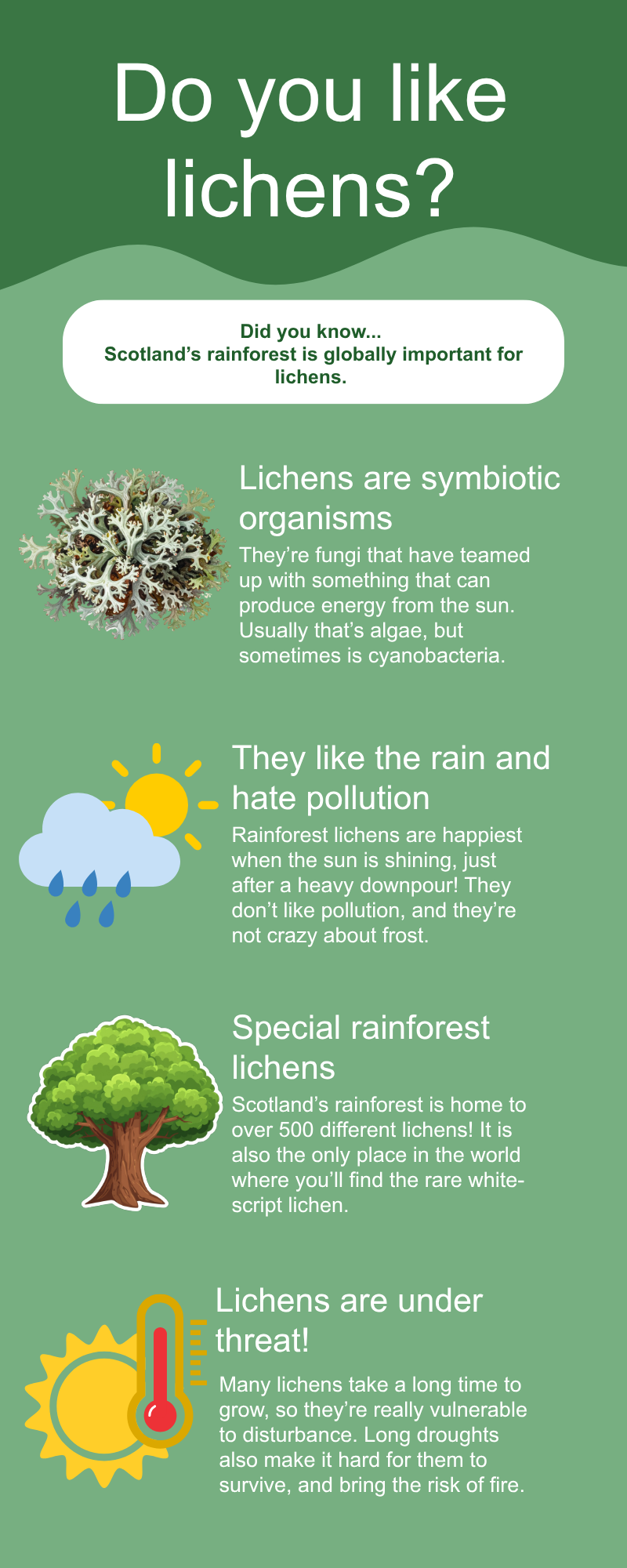
Scotland’s rainforest is globally important for lichens, with over 500 different species making their home in these woodlands. Some are extremely rare, and we have an international responsibility to look after them.
White script, for example, is a lichen that’s found in the hazel woods of Scotland’s west coast, and nowhere else in the world. Norwegian specklebelly grows at far more sites in Scotland than in Norway! It’s recorded at just one other site in the UK as well as a handful of global records from Madeira, the Falkland Isles and Chile.
But what is a lichen?
They’re a symbiotic organism of a fungus teamed up with something else. This partner is usually algae, but more rarely, it’s cyanobacteria, a simple, but ancient, bacteria. Both algae and cyanobacteria can photosynthesise (produce energy from sunlight) and this is what feeds the lichen. However, they can only photosynthesise when the lichen is wet, which is one of the reasons why so many of them live in the rainforest.

Black-eyed Susan lichen. Credit Richard Thompson
Some rainforest lichens take a long time to grow, so they don’t cope well with disturbance. They’re also quite particular about what they’re growing on, with many favouring particular species of trees, like hazel and willow. Rainforest lichens are also sensitive to long frosts or droughts, and hate pollution.
Some lichens are difficult to identify, but many are easy to spot once you know what you’re looking for. If you’d like to know more, check out our guide to lichens and bryophytes.

Lichens living together. Credit Gordon Rothero